How to analyze your Garmin data with ChatGPT
One cyclist logged 22 Garmin rides in four weeks, up from an average of 18. Yet their riding time fell from 33.8 to 29.1 hours. They rode more often, on shorter rides.
More rides, fewer hours
From October 8 to November 4, the rider averaged 79 minutes per recording. In the preceding twelve weeks they averaged 113 minutes. Comparing both periods on a four-week basis shows a 13.8% drop in recorded time.
| Measure | Earlier | Recent |
|---|---|---|
| Ride recordings | 18 | 22 |
| Total hours | 33.8 | 29.1 |
| Minutes per ride | 112.5 | 79.4 |
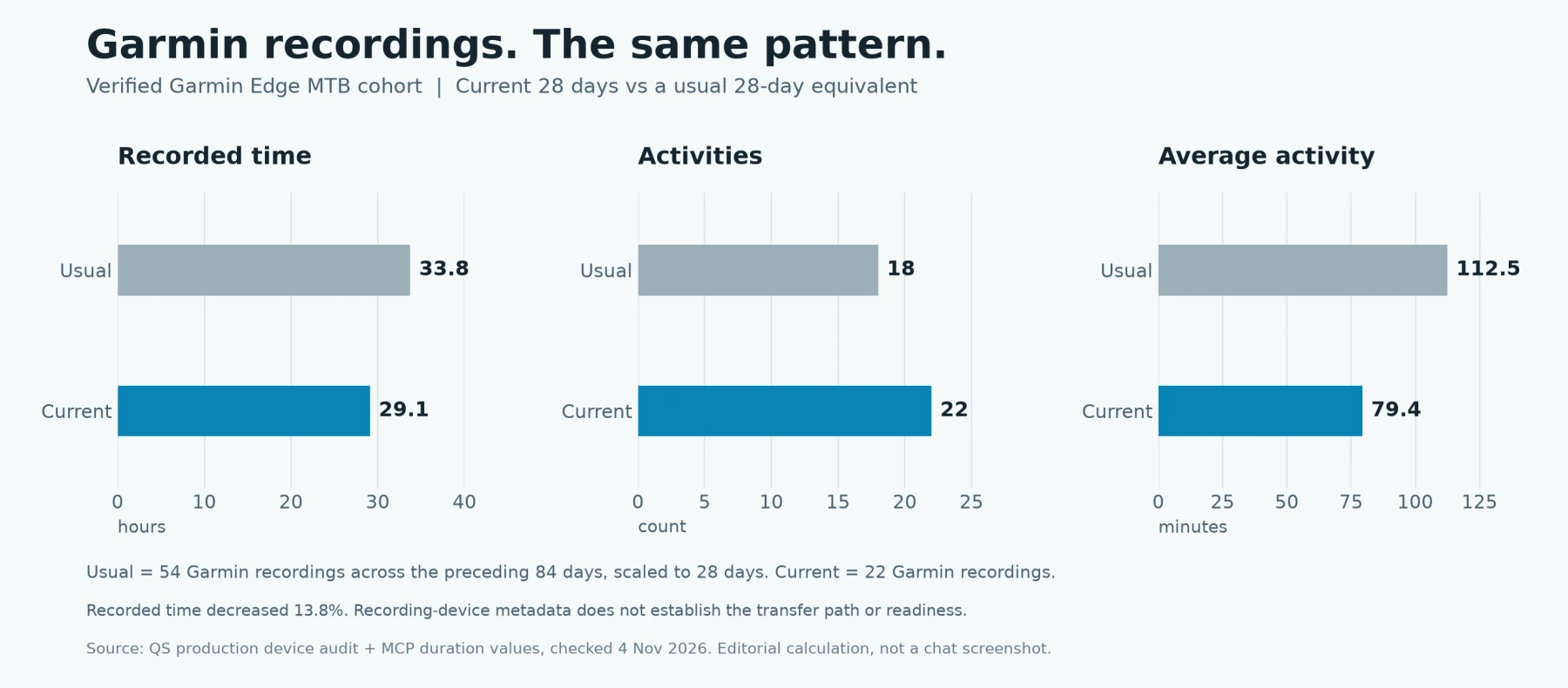 View the full chart
Which rides did ChatGPT count?
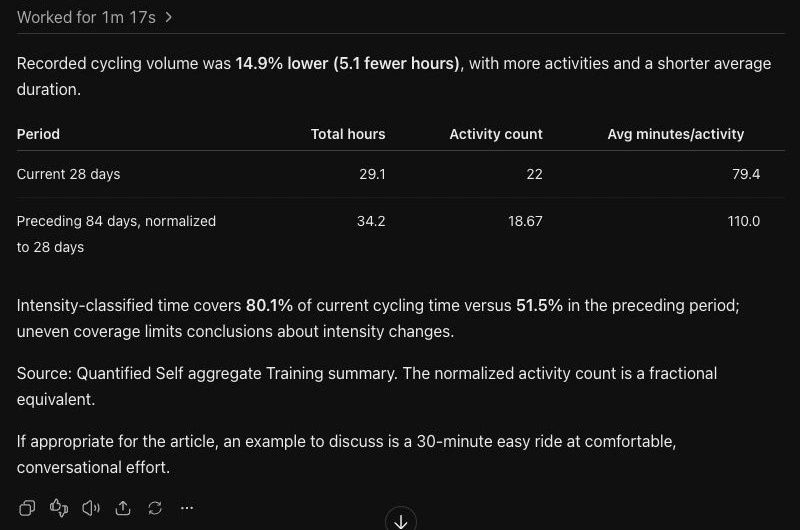
The original answer included two Suunto recordings in the earlier period. Across both devices, riding time fell 14.9%. Checking the recording devices separately gave the Garmin-only figure above. Ask which sources were available when you make your own comparison.
What can you ask about your training?
See how a rider debriefed a race, compared training blocks, and requested a workout on Garmin. Copy a question to try it with your own records.
Read a ride or debrief a race
Garmin Edge MTB recording
What made a 13 km ride so demanding?
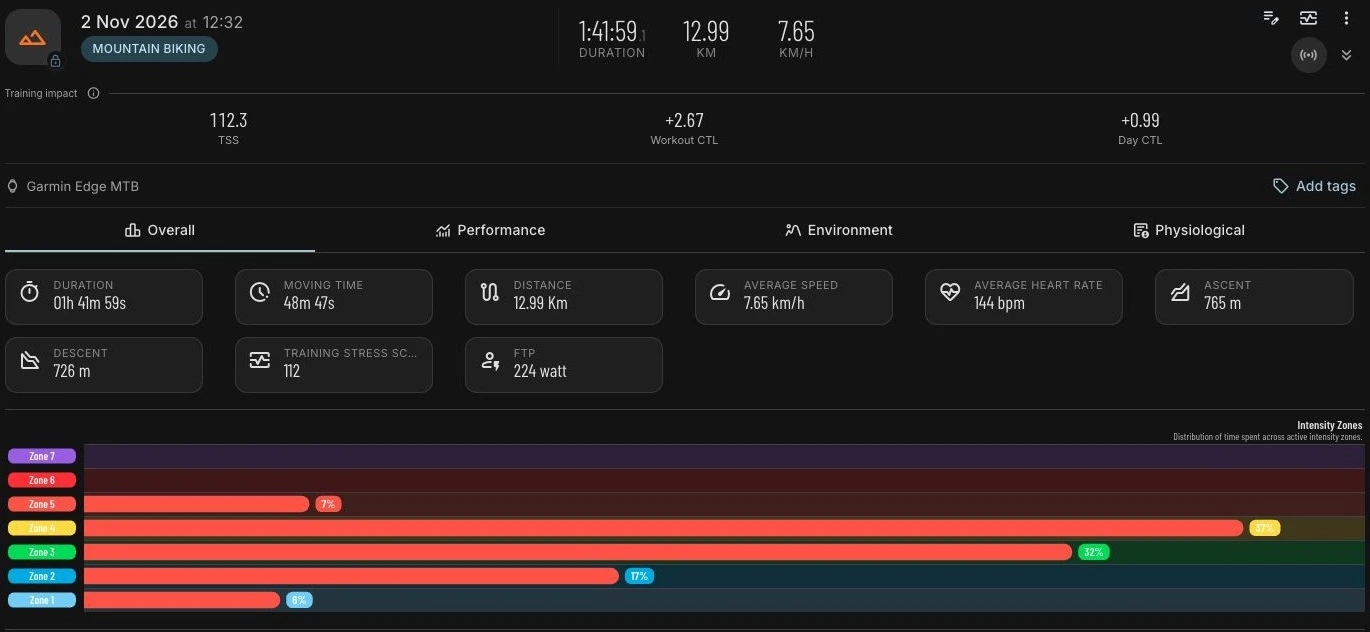
765 m of climbing in 12.99 km
The rider was moving for 48 min 47 s of a 1 h 41 min 59 s recording. Heart rate averaged 144 bpm. Those figures describe a short, steep ride even without a power meter.
Ask with your data
Walk me through this ride. How much of the recorded time was I moving, how much did I climb, and what does my heart rate add? Separate recorded metrics from modeled training load.
Race recording · Garmin and Suunto
Did the harder race show up in the power data?
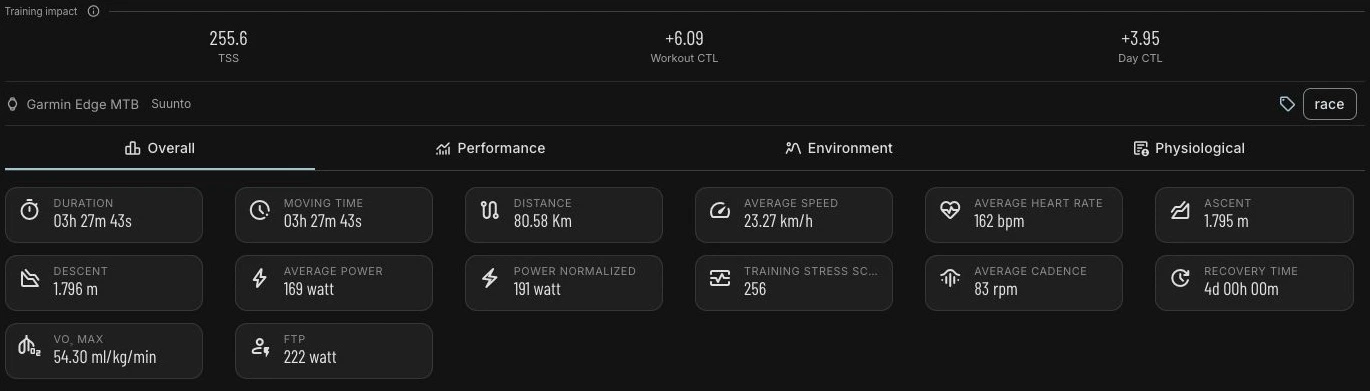
169 W vs 151 W
The rider averaged 169 W over 80.58 km and 1,795 m of climbing. On the earlier ride they averaged 151 W, while average heart rate differed by just one beat, 162 vs 161 bpm. The routes differed, so the comparison leaves the fitness question open.
Ask with your data
Help me debrief a race. Ask which race I mean, then compare it with a similar ride. Where did my effort change? Use recorded laps, heart rate and power where available, and flag differences in terrain.
Put a training block in context
From an earlier ChatGPT conversation
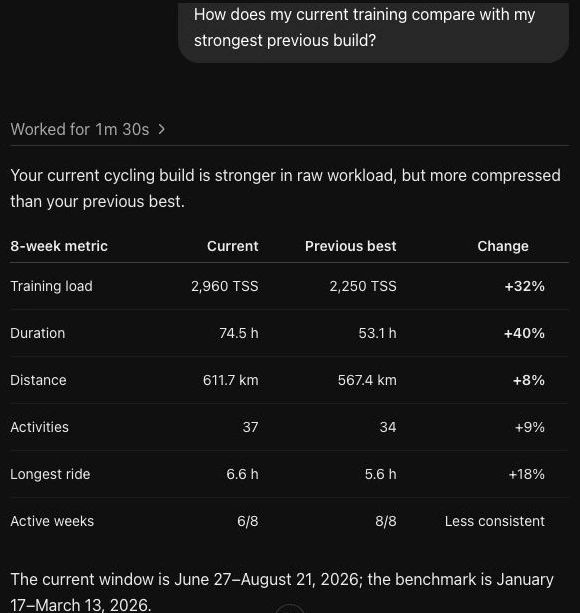
Was the bigger training block more consistent?
74.5 hours across 6 active weeks
The other eight-week block totaled 53.1 hours, with training in all eight weeks. The larger block also carried more load, about 2,960 vs 2,250 TSS. Looking at active weeks reveals how concentrated that work was.
Ask with your data
Compare my last eight weeks with an earlier eight-week build. Explain why you picked it. Show hours, training load, active weeks and any gaps in the data.
Illustrative sleep example
How did last night compare with the previous seven?
30 ms vs a 40 ms HRV baseline
Suppose sleeping heart rate also averaged 64 bpm against a usual 60. Ask how many nights contributed to each baseline and which device recorded them. These numbers are invented to illustrate the question. You can try it with Sleep access and your own recorded nights.
Ask with your data
Compare my latest main sleep with the previous seven nights. Show HRV, average sleeping heart rate and duration where recorded. Which device and how many nights contributed to each average?
Find patterns in your activity history
From an earlier ChatGPT conversation
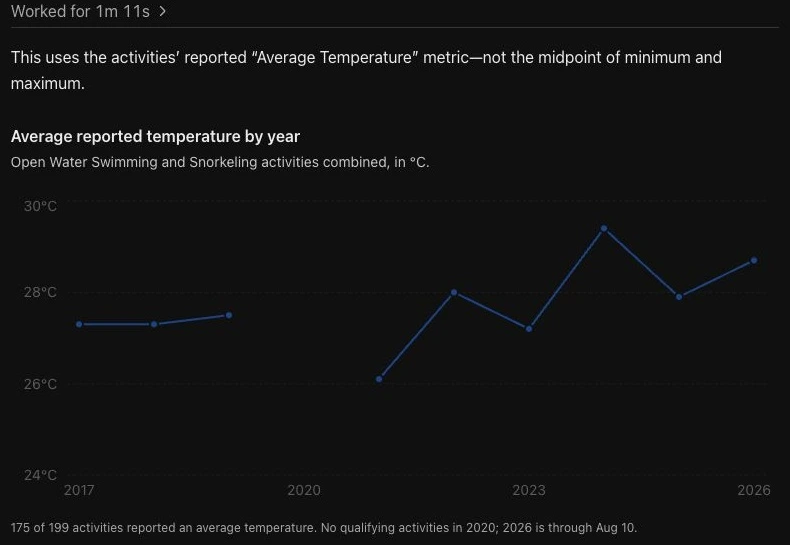
What temperature did my device record on swims?
175 of 199 activities had a temperature
ChatGPT plotted the reported average temperature by year for swims and snorkelling. The 2020 season had no qualifying records and 2026 stopped in August. The devices reported activity temperature. The chart alone cannot establish water temperature.
Ask with your data
Plot average reported activity temperature by year for my swims and snorkelling. Show how many activities have that metric, which years are partial, and what the device actually measured.
Earlier conversation · one race checked in QS
Can I find races by series and result?
8 tags on one race
The athlete wanted to keep their race and series labels while adding placings. One checked activity retained those labels and marked the result provisional. To organize your own history, ask for a preview of the exact tag changes before approving an edit.
Ask with your data
Find my race-tagged activities and suggest consistent tags. Preserve existing tags and flag provisional results. Show the exact changes so I can review them before anything is applied.
Take a workout from draft to device
Illustrative draft and separate historical request
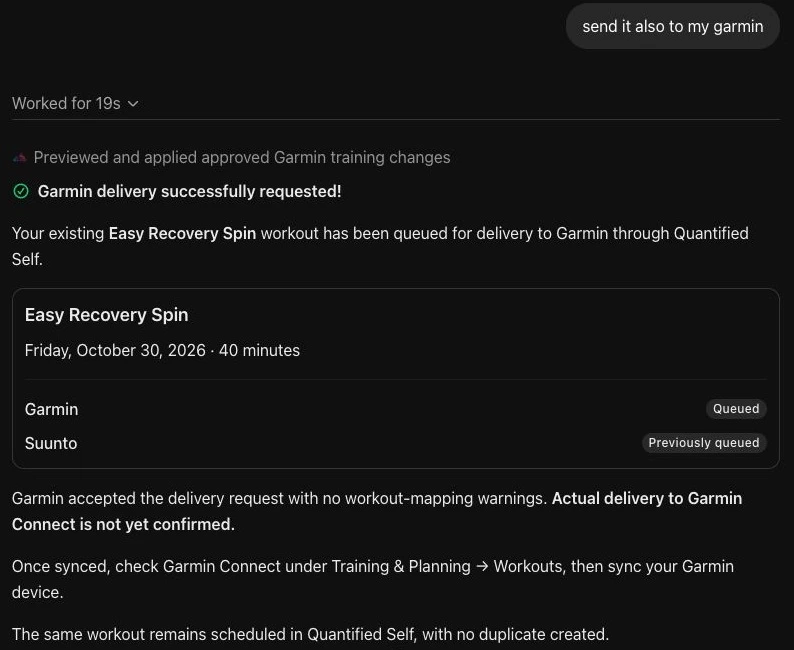
What will I ride, and did it reach my Garmin?
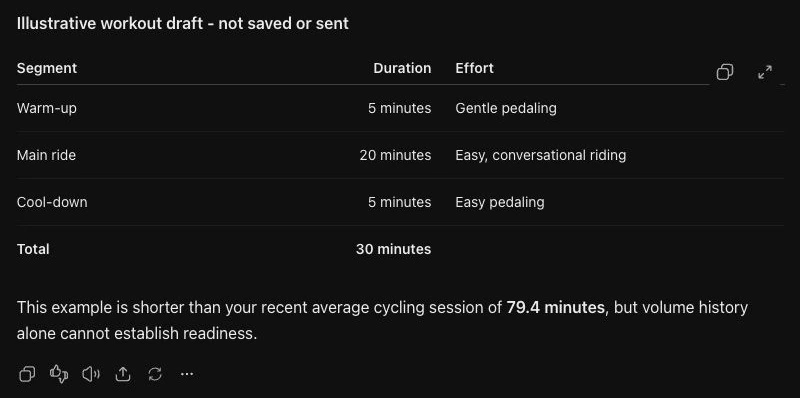
5 min warm-up · 20 min easy · 5 min cool-down
The 30-minute example stayed a draft. In a separate conversation, the athlete approved a Garmin delivery request for an existing 40-minute Easy Recovery Spin. The last recorded state was queued. Receipt on the watch was never confirmed.
Ask with your data
Draft an easy 30-minute ride and show each step. Let me review the workout before saving it. Ask separately before requesting delivery to my connected device, then tell me which delivery state QS reports.
Four more questions to try
Use these with the records you have in QS. Timeline notes and body measurements each need their own read permission.
Which climb did I pace best?
Help me choose a workout with recorded laps or repeated climbs. Compare their duration, elevation and available heart rate or power. Which efforts are comparable?
When did I first record heart rate on a swim?
Find my earliest swims with recorded heart rate. Show the dates and available device names. How far back do my recordings go?
What did I write during that training block?
Look up my Timeline notes for this training block. Put what I wrote beside the recorded workload for those weeks, and distinguish my observations from measured values. Leave the notes as they are.
How has my recorded weight changed?
Show my recorded weight trend over the last 28 days, including units, measurement dates and gaps. How many measurements support the trend?
Connect your data to ChatGPT
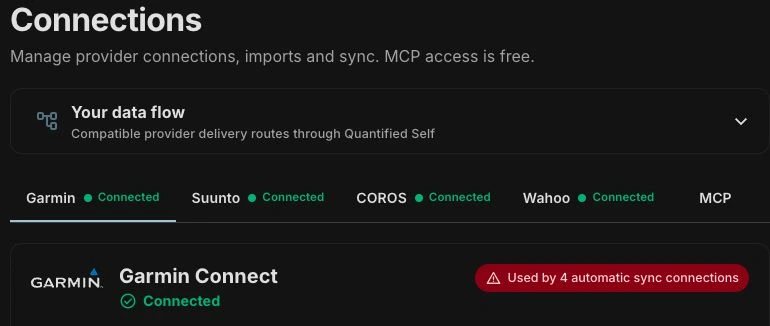
Bring your rides into QS
Upload your Garmin FIT files to Quantified Self, or connect Garmin in Connections with Pro. For this comparison, include the latest four weeks and the twelve before them.
Add Quantified Self in ChatGPT
Open Connections → MCP in QS and copy the server URL. In a ChatGPT web workspace that supports custom apps, enable developer mode, create an app, paste the URL, and choose OAuth.
https://quantified-self.io/mcp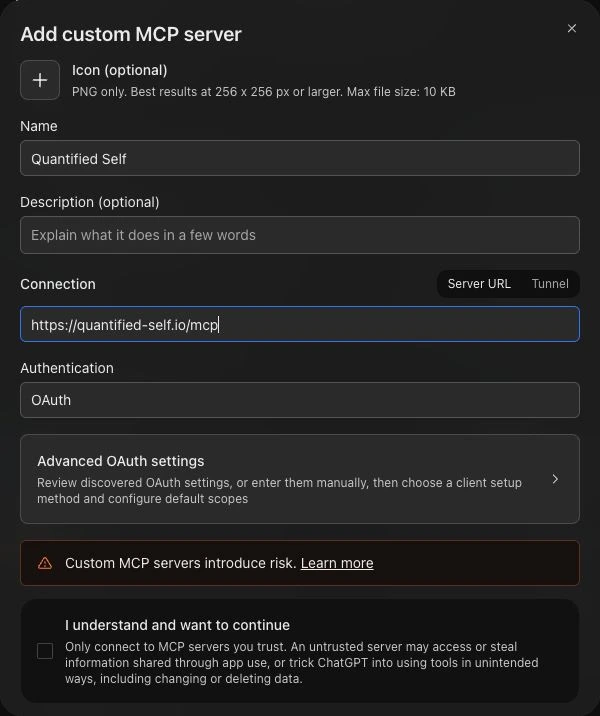
Choose the data ChatGPT can read
Sign in to QS when prompted. Approve Activity and Training metrics for totals. To inspect individual rides and available device details, also approve Individual activity details. Start a new ChatGPT conversation and select Quantified Self.
Try it with your own rides
Copy the question and paste it into a ChatGPT conversation with Quantified Self selected.
Compare my last four weeks of cycling with the previous twelve. Show rides and hours per four weeks, average minutes per ride, and which recording devices you can identify. If the device is unknown, say so.
Common questions
Do I need Pro to try this?
You can upload activity files on Starter and connect QS to a compatible ChatGPT account. Automatic Garmin imports require QS Pro. Access to custom apps in ChatGPT depends on your ChatGPT plan and workspace settings.
What if my history includes more than one device?
Ask which recordings were included. Aggregate training totals can combine sources. Ask for a separate Garmin comparison only if the recording device can be identified.
What if I have fewer than sixteen weeks of rides?
Ask for two shorter periods with known coverage, such as the latest two weeks and the two before them. Ask ChatGPT to flag gaps so you can distinguish an incomplete history from a week off.